
Drone Inspection
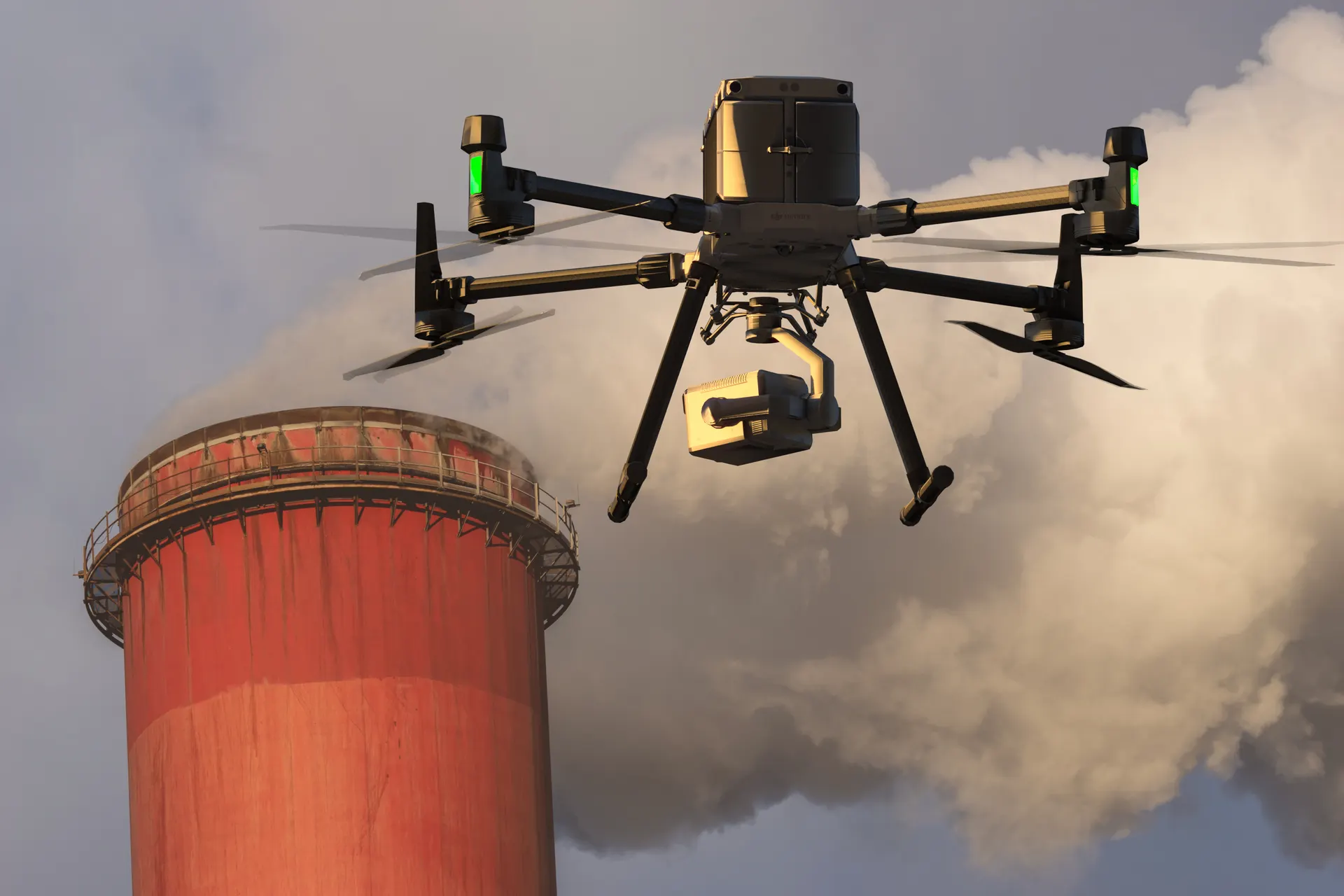
Some of the structures that most need inspecting are the hardest to reach: roofs, stacks, chimneys, tank shells and roofs, high-level steelwork, gantries and cladding. Getting an inspector next to them by scaffold, rope access or a mobile platform takes days of setting up, and the work at height carries its own risk. Sending a drone up for a first look often takes less than an hour.
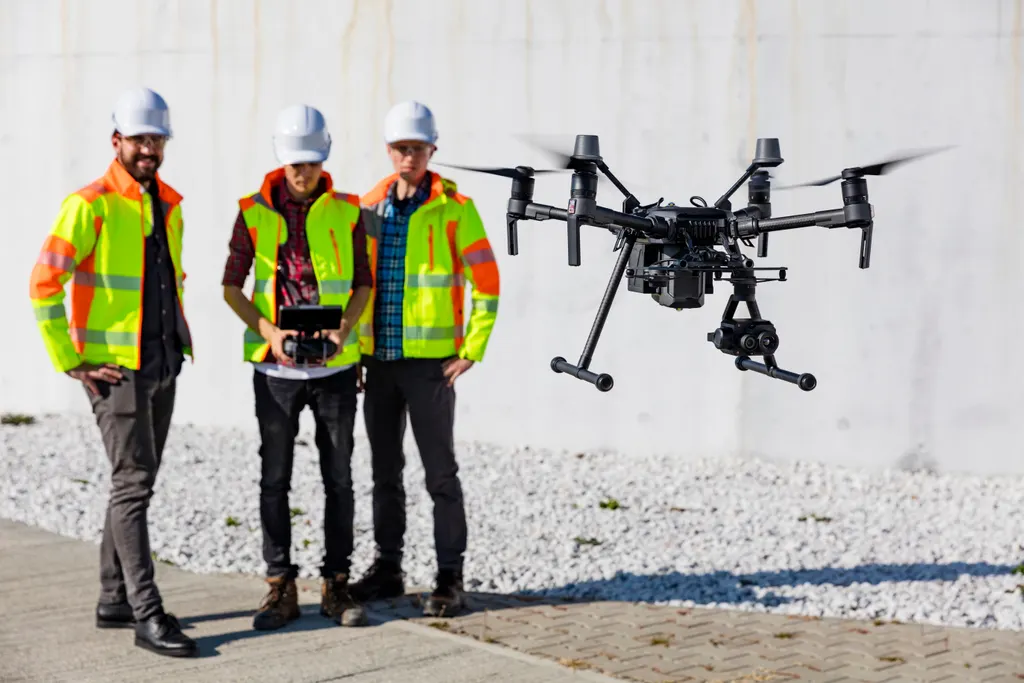
Test Inspect Group flies drone inspections under a CAA PDRA01 operational authorisation, the permission in the Civil Aviation Authority's specific category for commercial flying closer to people and buildings than the open category allows. Every flight is flown by one of our three GVC-qualified remote pilots (the CAA's General Visual Line of Sight Certificate). Our flights carry £5 million aviation third-party liability insurance that complies with EC 785/2004, and we can give you the policy details and the CAA authorisation for your permit pack.
As with remote visual inspection, the deciding factor is who looks at the footage. A drone gives you a camera in the right place. Deciding whether what it shows is corrosion, coating breakdown, a cracked weld or just a shadow is the job of a qualified visual inspector. Our footage is reviewed by the same CSWIP welding inspectors and PCN visual inspection personnel who carry out our other inspection work.
What we inspect
- Roofs and cladding: condition surveys, storm damage, missing or slipped sheets, gutters and fixings.
- Stacks, chimneys and flues: external condition, coating, corrosion, ladders, platforms and fixings.
- Storage tanks: shell and roof condition, coating, corrosion and fittings, without scaffold.
- Structural steelwork and gantries: high-level members, connections, bolting and paint condition.
- Buildings and plant: facades, masonry, pipe racks and areas you can't reach on foot.
- Thermal surveys: roof moisture, heat loss and hot spots on plant, from the Matrice 300 thermal camera.
- Before and after work: a dated record of condition before a job starts or after it is finished.
The equipment
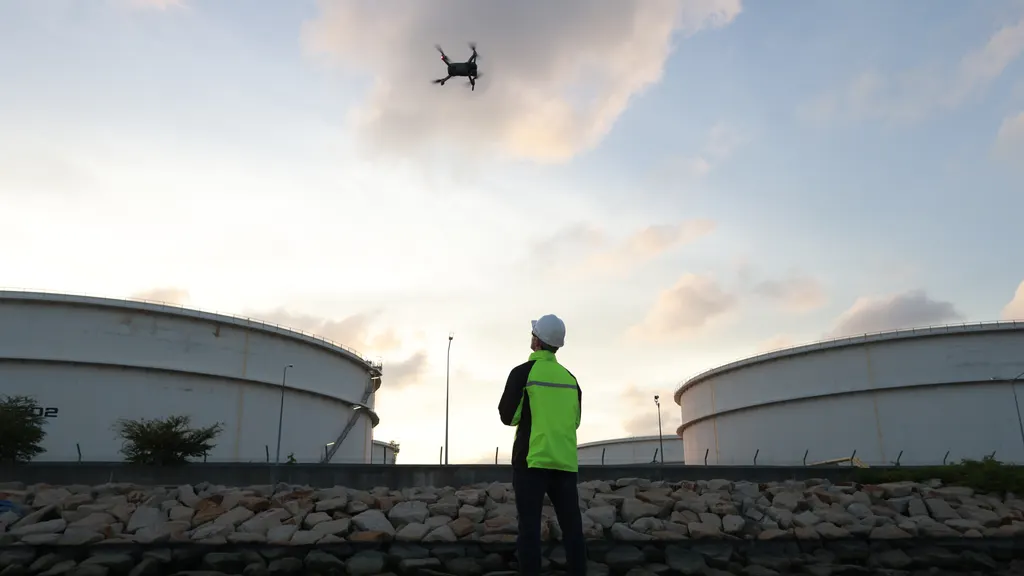
We pick the aircraft for the job. Our DJI Matrice 300 RTK is an industrial inspection platform. It carries a DJI Zenmuse H20T, which combines a 23x optical zoom camera (up to 200x hybrid zoom), a wide-angle camera, a laser rangefinder and a radiometric thermal camera that records the temperature of every pixel. It can read detail on a weld, bolt or crack from a safe distance, measure how far away it is, and show temperature differences in the same flight. It holds position steadily in wind, and its RTK satellite positioning tags every image with an accurate location, so a later survey can fly the same path and compare like with like. A DJI Mavic 3 Pro, with its telephoto camera, records detail from a safe stand-off distance. A sub-250 g DJI Mini 4 Pro covers sensitive locations. A DJI Avata, a ducted aircraft flown on video goggles, gets in close around plant and through confined structures.
When an off-the-shelf drone can't do the job, we build one that can. We design and build custom aircraft in house for unusual access, tight spaces or a specific camera or sensor. These include 3-inch FPV drones, adapted from racing designs, that are small and agile enough to fly inside buildings, roof voids and structures where a standard drone won't fit. We fly them under the same authorisation and insurance.
Thermal imaging
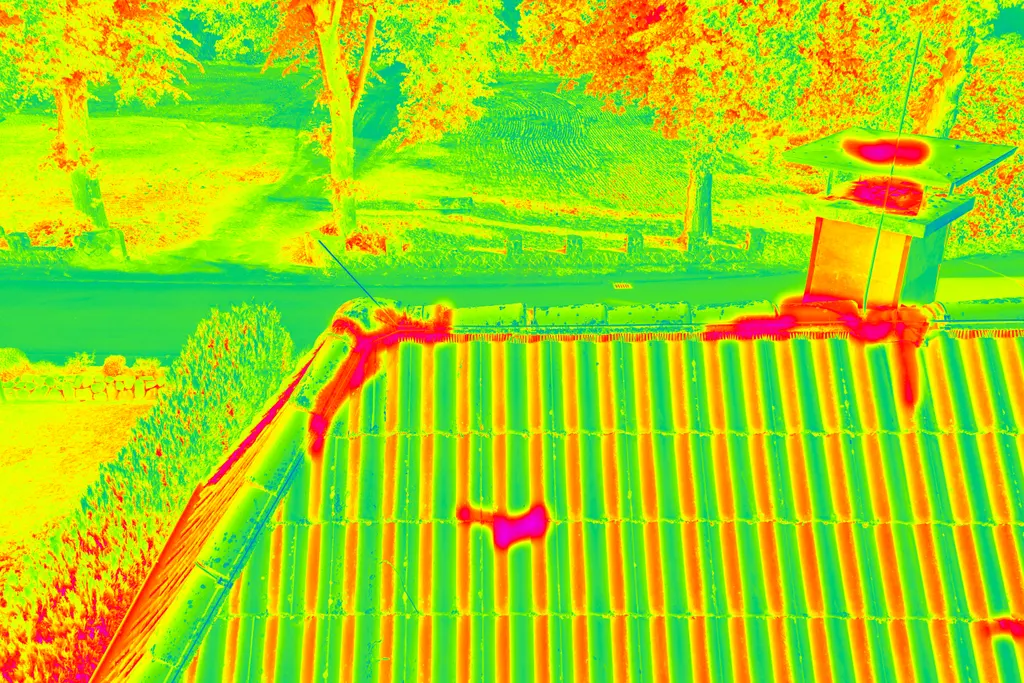
The thermal camera shows differences in surface temperature that you can't see by eye. From the air it can show heat loss and missing insulation, trapped water under flat roof membranes, hot spots on stacks, flues and refractory-lined plant, and overheating equipment. Each thermal image is recorded alongside a normal image of the same view, so a finding can be located on the structure.
Thermography measures surface temperature, not what causes it. Sun, wind, rain and the time of day all change the picture, so we plan thermal flights for the right conditions and confirm anything significant with a closer inspection.
What a drone inspection can and can't tell you
A drone inspection is a visual inspection, so it records what can be seen on the surface. It is very good at showing you where to look: corrosion, coating failure, deformation, missing components and visible cracking.
It does not measure wall thickness and it does not find defects below the surface. Where the footage shows something that matters, we follow it up with contact methods such as ultrasonic thickness testing or magnetic particle testing, using the drone survey to target the access instead of scaffolding the whole structure. For inside vessels and pipework, see remote visual inspection.
Planning a flight
Every flight is planned and risk assessed before we arrive. We check the airspace and any restrictions around your site, agree a take-off area and a controlled area with you, and keep the aircraft within the pilot's line of sight. Some sites, including airfields, nuclear licensed sites and other protected locations, need extra permission from the site or the airspace authority before anyone can fly. Tell us where you are early and we will find out what's needed.
Weather decides the day. Strong wind and rain ground drones, so we agree a back-up date when we book.
What you get
You get a written inspection report with located, annotated images of every finding, plus the full set of stills and video. The report says what was seen, where it was and what we recommend, including whether anything needs a closer, hands-on inspection.
Where we work
We fly across the UK from our bases in Cumbria, Durham and Southampton. A drone survey is often booked alongside other inspection work on the same visit, which saves a second mobilisation. Tell us what you need to see and where it is, and we will tell you whether a drone is the right tool.
Non Destructive
Testimonials
“Test Inspect is our go-to company for non-destructive testing and welding inspection. We use them almost on a weekly basis for magnetic particle and visual on our Sellafield projects where a great deal of oversight is placed on the NDT and the quality of our welding and fabrication.”
Richard Tubman -Numech Managing Director
“My dealings with Test Inspect have been extremely easy due to their professional proactive working ethics. The service was very efficient and all of my expectations were met. I chose Test Inspect to carry out the works on my project as I have worked with Lee for many years and know that he and his team will always provide exactly what I require and to the highest standard. I would certainly recommend others utilising Test Inspect services.”
Callum Woodend WCELOperations Director
“Cheers Tony, and thanks again for your help. Great turnaround and service from Test Inspect,
John IrvingMechanical Quality Inspector
Service Delivered - Sellafield Welder Qualification,
Turnaround Time - <24hrs”
“Firstly I'd like to thank you both for your contribution to the last phase of work for RR SMR to help identify the benefits of digital image capture with gamma sources and the potential for reducing the working space envelope. Your assistance and expert knowledge was very much appreciated.
Doug WylieTWI Ltd
Service Delivered - Level 3 Radiography and Digital Radiography R&D”